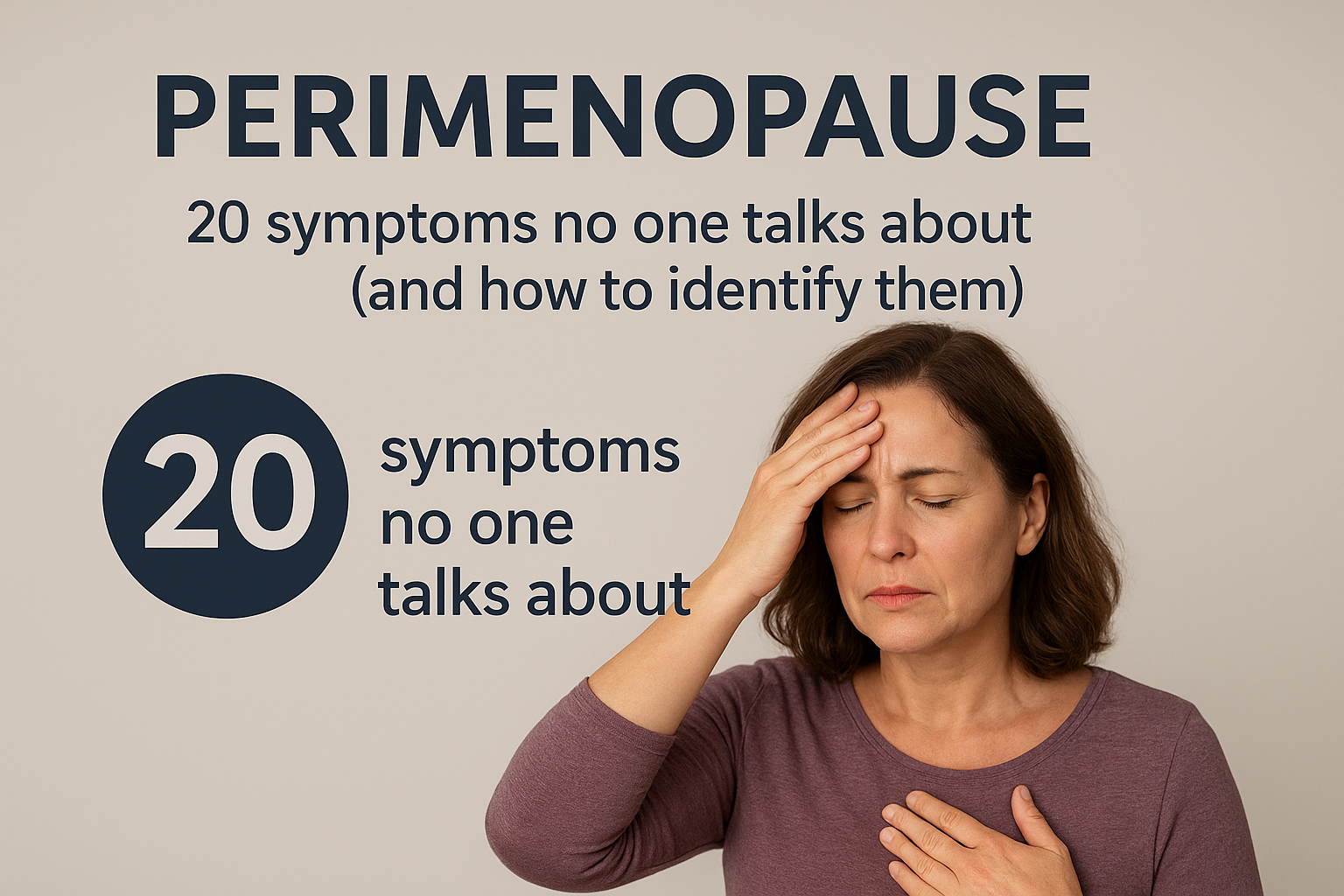
Perimenopause: 20 Symptoms Almost No One Talks About (and How to Identify Them)
Perimenopause is the transitional phase before menopause, marked by hormonal fluctuations that can cause physical, emotional, and cognitive changes. While some symptoms are well known—such as hot flashes and irregular periods—many others go unnoticed, even though they can significantly impact quality of life.
In this article, you’ll find 20 lesser-known symptoms, why they happen, and how to identify them.
426 people are reading this now.
🔷 What Is Perimenopause?
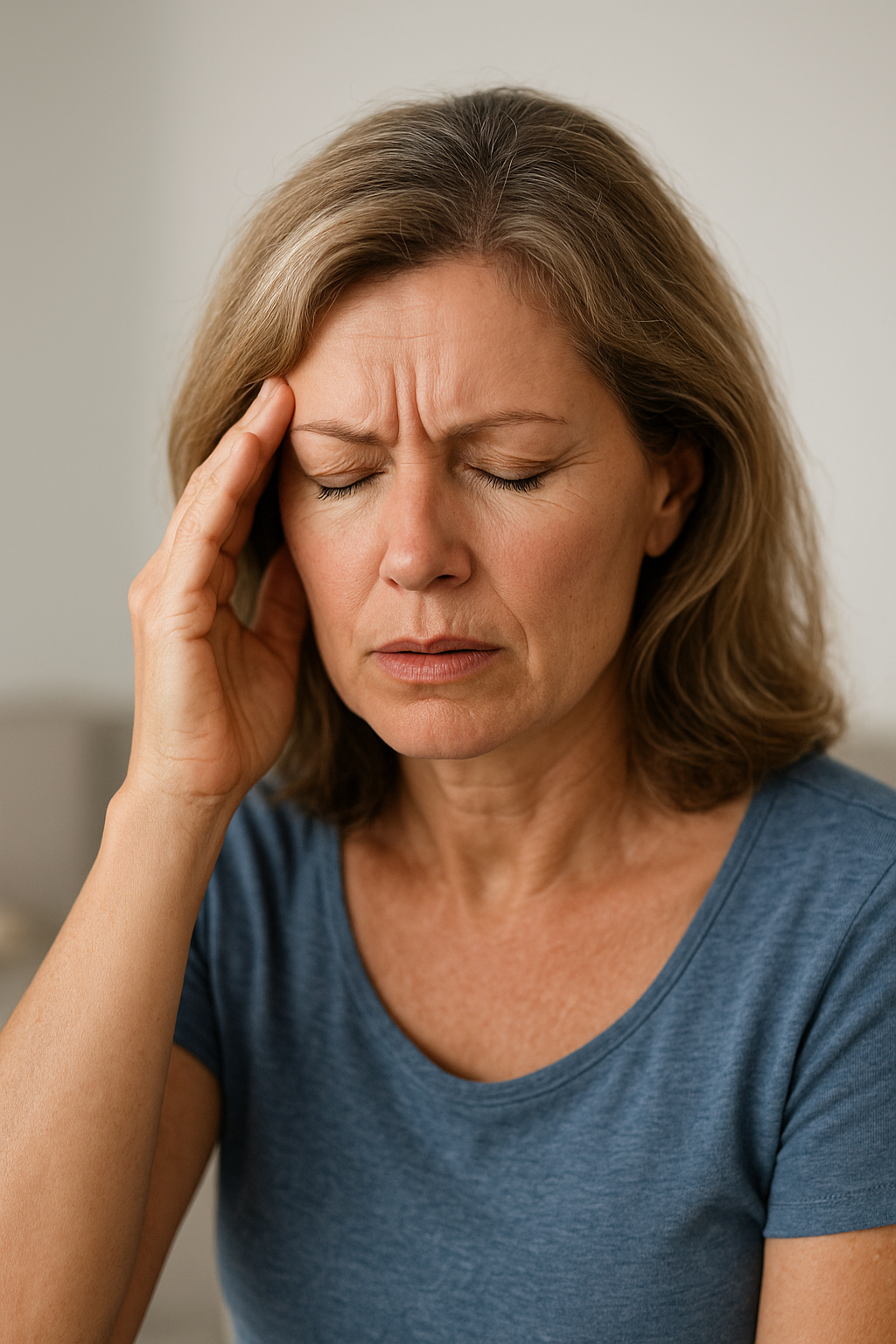
Perimenopause can begin between ages 35 and 50 and may last 2 to 10 years. During this time, estrogen and progesterone fluctuate irregularly, triggering a variety of symptoms that can change from month to month.
These hormonal shifts can affect the menstrual cycle, metabolism, mood, sleep, and even cognitive functions.
🔷 20 Perimenopause Symptoms Almost No One Talks About
1. Increased sensitivity to stress
Situations that used to be manageable may suddenly feel overwhelming or exhausting.
2. Mild heart palpitations
Hormonal fluctuations can trigger stronger or faster heartbeats—usually temporary.
3. Occasional tingling sensations
Pins-and-needles feelings or numbness in hands and feet are more common than many realize.
4. Ringing in the ears
Many women report intermittent buzzing or ringing during this phase.
5. Changes in sense of smell
Some notice heightened sensitivity to odors or intolerance to smells that were previously neutral.
6. Frequent bloating
Fluid retention increases due to hormonal shifts, especially near the menstrual cycle.
7. Digestive changes
Gas, irregular bowel movements, and slow digestion are common occurrences.
8. Increased sensitivity to alcohol
Even small amounts may cause discomfort, headaches, or a racing heart.
9. Joint pain
Elbows, knees, and wrists may feel stiff or achy, especially upon waking.
10. Greater tendency toward allergies and skin sensitivity
The skin may react more easily to products, fabrics, or foods.
11. Dry mouth
Saliva production may temporarily decrease.
12. Changes in body odor
Some women notice a different scent—even with normal hygiene habits.
13. Coordination changes
A mild sense of imbalance or brief loss of motor focus may occur.
14. Breast tenderness without clear cause
Fluctuating estrogen can trigger unexpected sensitivity.
15. Sudden chills
Just like hot flashes, the opposite can also appear.
16. Increased sensitivity to noise
Environments that once felt normal may now seem excessively loud.
17. Libido changes that vary month to month
It’s not only a decrease—libido may also increase at certain times.
18. Difficulty finding words
Often described as “brain fog” or brief memory lapses.
19. Blood pressure fluctuations
Mild, temporary variations may occur.
20. Body temperature changes throughout the day
Even without hot flashes, it’s common to feel warmer or cooler without a clear explanation.
🔷 How to Identify Whether These Symptoms Are Related to Perimenopause
✔ Observe the pattern
Symptoms that come and go cyclically may signal hormonal fluctuations.
✔ Check for menstrual changes
Shorter, longer, or irregular cycles often accompany these symptoms.
✔ Consider your age range
Most women enter this transition between ages 35 and 50.
✔ Track what you feel
Keeping a journal helps clarify what’s changing and supports conversations with healthcare professionals.
🔷 When to Seek Professional Guidance
You should consider consulting a healthcare provider when symptoms:
disturb sleep, mood, or well-being
cause intense or persistent pain
lead to very heavy bleeding
interfere with daily activities
Perimenopause is natural, but proper care can greatly improve quality of life.
🔷 Conclusion
Perimenopause is a phase full of nuances. Many symptoms are rarely discussed, yet they are extremely common. The more informed you are, the more smoothly and confidently you can navigate the changes taking place in your body.
Recognizing these signs is the first step toward facing this transition with awareness and self-care.
myperimenopause 2025 - All rights reserved.